Overview
Caravan Interactive was the primary technology partner for Find. Eat. Drink. (FED). We designed, built, and launched the mobile applications, a custom content management system, and the backend web services in 2012–2013, then kept the client through 2020 — six more years of product, operations, and technical support.
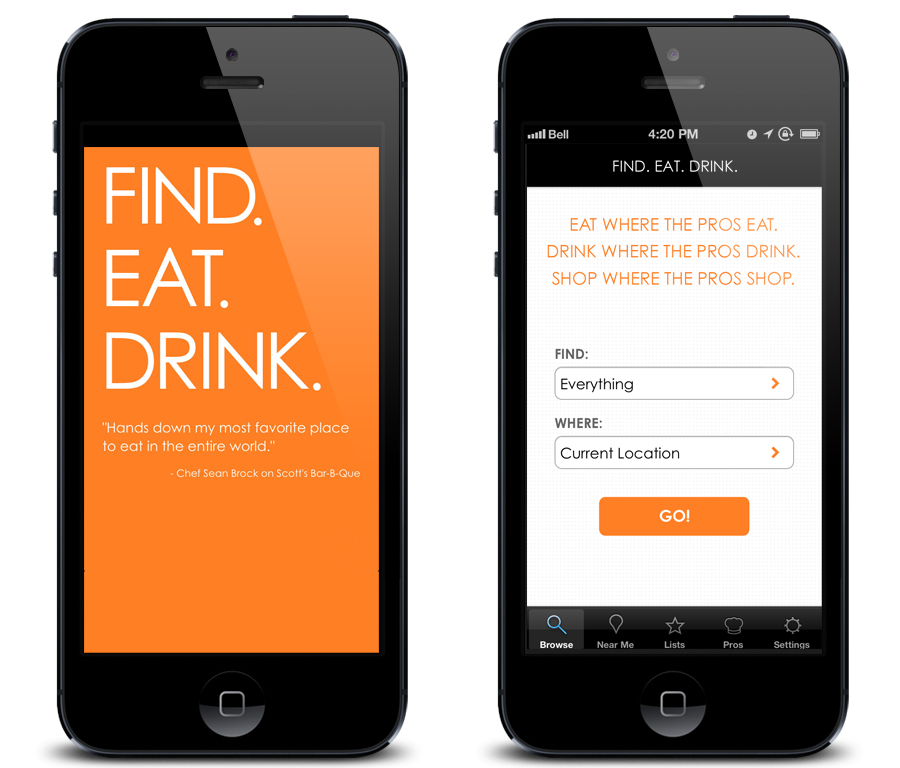
FED started as a culinary website and a set of PDF city guides. The brief was to turn that editorial voice into a native discovery app: a place to explore global recommendations for restaurants, bars, coffee shops, markets, and retail stores, written by the people who actually work the floor.
Timeline
Work started with scoping in April 2012. Kickoff followed in May and June, and we delivered the first iOS application framework and CMS in August 2012.
From there Caravan stayed on for operations and technical support, including a 2013 SLA. Iterative updates ran through Release 2.1, an iOS 7 upgrade finalized in September 2013. The engagement did not stop at launch: FED remained a Caravan client from 2014 through 2020.
2012 — First ship
Scoping in April, kickoff in May/June, iOS framework and CMS delivered in August.
2013 — Release 2.1
iOS 7 restyle of tables, buttons, map pins, and navigation, finalized in September.
2014–2020 — Retained
FED stayed a Caravan client for six years after the first App Store years.
Product
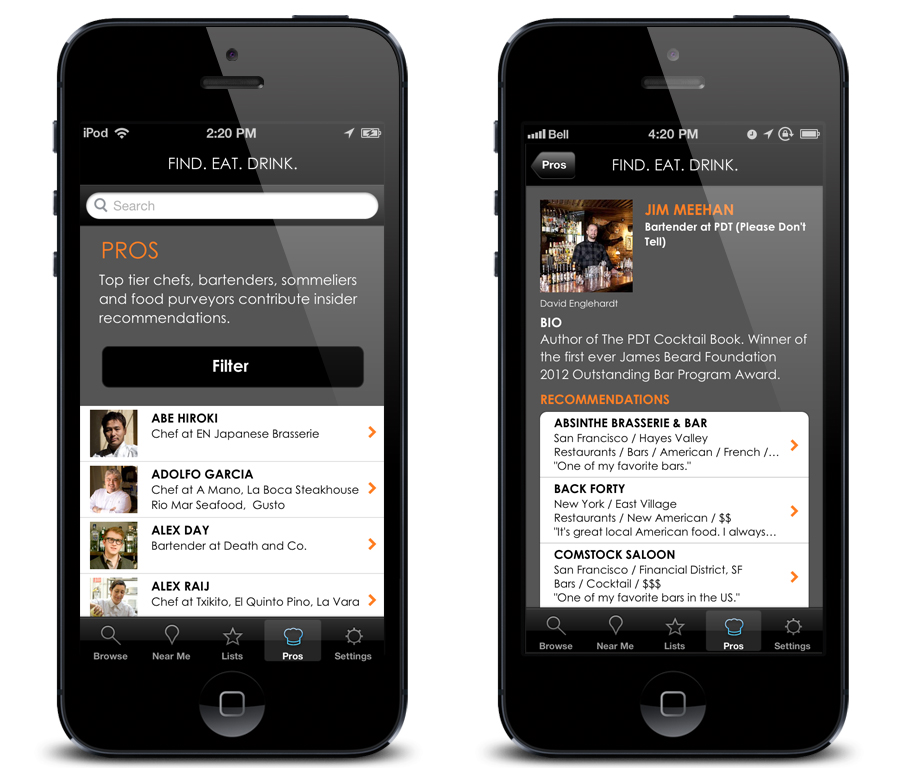
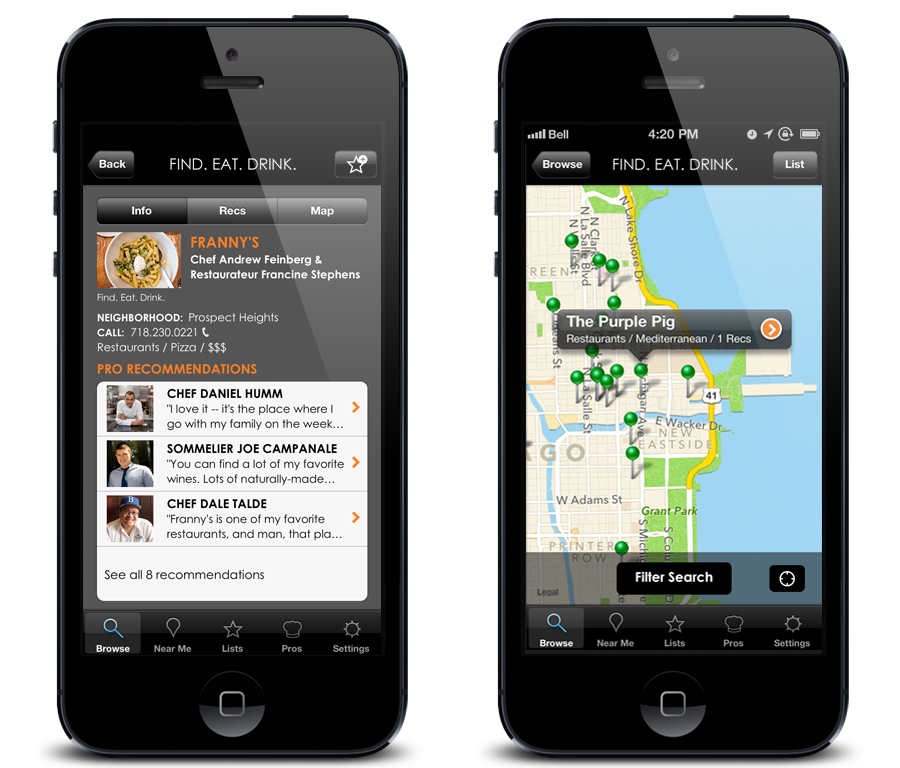
The app was a curated guide, not a crowd-sourced dump. Nearby used GPS so people could find and map destinations within a radius. Browse and search filtered by category and keyword across shops, restaurants, bars, and coffee, in both list and map views. Favorites and settings let users save places, manage accounts, and sign up for newsletters.
Recommenders were the editorial spine: profiles of chefs, sommeliers, and bartenders, each with the destinations they actually sent people to.
Systems
Caravan built a cloud-hosted CMS and webservice so FED staff could manage, moderate, and publish destinations, categories, and editorial content without waiting on an engineering ticket. That stack sat behind the iPhone and iPad clients, which we wrote natively in Objective-C.
The first release established the product. Release 2.1 was a full visual and interaction pass for iOS 7: styling, table views, button mechanics, map pins, and navigation, so the app felt current on the new OS instead of a holdover from 2012.
Clients
Native iOS for iPhone and iPad, built in Objective-C.
CMS & API
Cloud-hosted tools for destinations, categories, and editorial publishing.
Discovery
Nearby, browse, search, list and map, plus saved favorites.
iOS 7
Release 2.1 restyled the app for Apple’s 2013 interface language.